

The Kitchen Closet: Accounts of Dysphoria, Hunger, and Hidden Selves
- Faiza Ruksar Arif
The kitchen does not begin by teaching a person how to cook. It begins by teaching the body where to stand. It teaches this quietly. No one announces it as training. No one says, “This is how gender enters the body.” The lesson happens through minute corrections. Stand closer. Move aside. Hold the knife properly. Do not spill. Do not take too much. Wait until everyone has eaten. Taste, but only to check the salt. Eat, but not greedily. Help, but do not make a scene of helping.
The kitchen is full of these small rules. They do not look like rules because they arrive as care, habit, family, preparation, and common sense. But they shape the body all the same. They teach it how to move around food. They teach it when hunger can be shown and when it must be hidden. They teach it what kind of person is expected to serve and what kind of person is allowed to simply eat.
This is where the kitchen begins to resemble a closet. Not because it hides queerness in the obvious sense. Not because it locks a person away. But because the closet has never only been about hiding. For queer people, the closet is also a system of appearance. It teaches you how to be seen without being fully known. It teaches you what must be softened, delayed, translated, or disguised so that life can continue without disturbance. What is hidden is not absent. It is managed.
For trans people, this matters because dysphoria is not only an experience of looking at the body and finding it wrong. That is one part of it, but not all of it. Dysphoria is also felt through use. It appears in what the body is made to do. It lives in gestures, appetite, posture, labour, voice, waiting, serving, eating, and not eating. It is not always dramatic. Sometimes it is the slow knowledge that the body is being asked to become something it cannot live with .
Karan, a trans man, remembers the kitchen through this kind of slow knowledge. He was not dragged into it. He was not openly forced. That is what made it harder to understand. The kitchen was simply where he was expected to be because he was being raised as a girl. When guests came, he was called to help. When the women began preparing food, he stayed. If he stood outside too long, someone noticed. If he left before the work was done, someone called him back.
No one said, you must learn this because you are a girl. They did not need to. It was already inside the way people spoke. “Learn properly.” “This will help later.” “What will you do when you have your own house?” The sentences were light. Sometimes they were jokes. But they settled heavily.
He remembers being handed onions, tomatoes, coriander, and plates. He remembers being told to wash rice again because the water was still cloudy. He remembers someone turning his hand slightly when he held the knife wrong. The correction was gentle. That was part of the problem. It did not feel violent. It felt ordinary. It felt like love, sometimes. It felt like being included. And yet, something in him tightened each time the body was made to learn.
He watched the boys move through the same kitchen differently. They came in to steal a piece of fried potato, to drink water, to ask when food would be ready. They leaned on the counter. They ate standing up. They left when they were bored. No one asked them to stay and learn. No one told them to cut properly. No one made their presence continuous.
Karan’s presence was not like that. His presence had weight. It came with expectation.
This difference did not arrive as theory. It arrived as irritation, then shame, then a kind of bodily refusal he did not yet have language for. He did not hate the kitchen. That would be too simple. Sometimes he liked the smell of onions browning. Sometimes he liked the order of things. But he hated the way his body was understood there. He hated being praised for attentiveness, for quietness, for knowing when to help. He hated how quickly the room recognised him when he did those things well. It worsened the disconnect from his body.
“You’re getting good at this,” someone once said. The words were meant kindly. He knew that. But they did not land as kindness. They landed as confirmation. Something in the room had accepted him, but not as himself. It had accepted a version of him that knew how to stay, soften, serve, and anticipate.
Later, he would understand this as dysphoria. Not the sudden dysphoria of the mirror, but the dysphoria of being used wrongly. The body could do the task. That was not the issue. The issue was that the task carried a gendered demand. Each small act pulled him toward a person he was expected to become.
He resisted in small ways. He cut slowly. He forgot to return. He said he had homework. He ran away to play cricket. He forgot to add ingredients. He burned something once and pretended it was an accident. These were not heroic refusals. They did not change the household. But they mattered to him. There were ways of keeping a gap between his body and what the kitchen wanted from it.
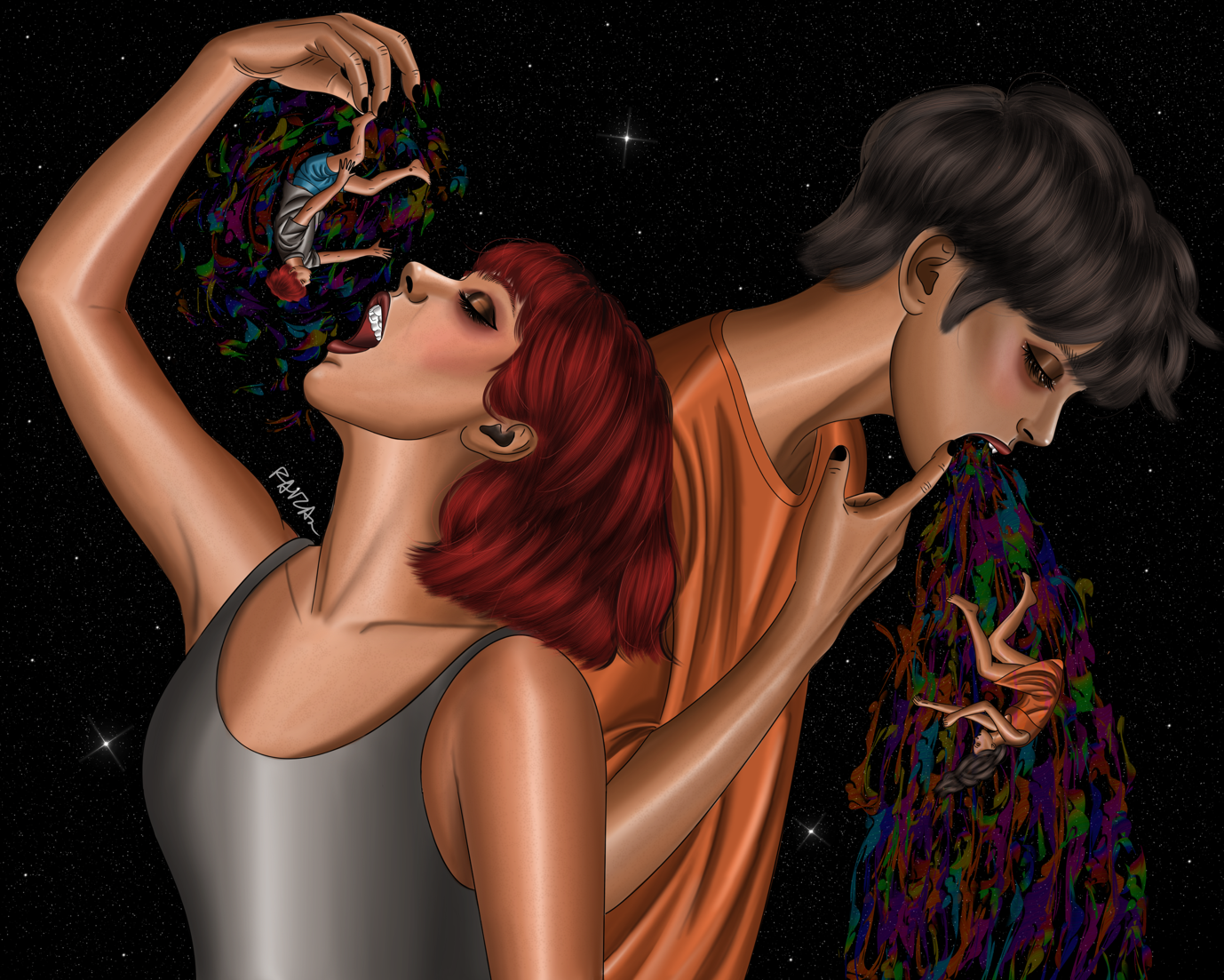
Kalki, a trans woman, remembers the kitchen differently.
She was raised as a boy, so the kitchen did not hold her in the same way. She was not expected to stay. She was sent in to fetch things, taste something, carry plates out, or call someone for dinner. She could enter the kitchen, but the kitchen did not address her as someone who needed to learn. No one corrected her hands. No one slowed down the work to show her. No one assumed she would one day need this knowledge.
She did not experience this as a simple exclusion. That would also be too easy. She was allowed in, but briefly. She was present, but not trained. She was near the work, but not claimed by it.
What she remembers most is watching. She remembers standing longer than necessary near the fridge or the door. She remembers pretending to look for something while watching how the women moved. There was a rhythm to the space that she wanted to understand. Not only the cooking. The authority. The ease. The way someone could taste a curry and know what was missing. The way a hand could reach for turmeric without looking. The way bodies seemed to belong there without needing permission.
She did not yet know why this mattered to her. It was not a simple desire to cook. It was something more private. The kitchen was one of the first places where she felt the ache of not being addressed by a world she wanted to enter.
Later, when she began cooking seriously, she did not feel free. She felt watched, even when no one was watching. She checked her movements. She repeated things. She was careful with spice, careful with timing, careful with how much confidence she allowed herself. The kitchen was no longer a place she passed through, but it did not become hers immediately. It made room for her slowly, and not always kindly.
The first time someone praised her food, she remembered it more than the person who said it. “This is good,” they said, and went on eating. For them, it was a comment. For her, it was something else. It was not full recognition. It did not undo anything. But it allowed her body to be read differently for a moment. Through food, through care, through a gesture that had once been withheld from her, something about her became possible.
This is the point where the kitchen held her secret. Not by naming it. Not by affirming her openly. But by allowing a part of her to exist inside an ordinary act. She could cook, and in cooking, she could inhabit a version of herself that had not yet been spoken in the rest of the house.
This is why the kitchen closet is complicated. For Karan, the kitchen pressed the wrong gender onto the body. For Kalki, the kitchen sometimes allowed the right gender to appear without being named. The same space harmed and held. It produced dysphoria and, at times, sheltered identity. It could misread the body, but it could also briefly affirm it.
This is also why food cannot be treated only as memory or nostalgia. Food is not innocent in this story. It does not simply bring people home. It does not only carry love across generations. Food can do that, yes. But food also brings the body into focus. It makes the body felt. Hunger, fullness, appetite, taste, fat, muscle, menstruation, curves, softness, sharpness, weight, growth…food touches all of these.
Studies on trans and nonbinary people show that eating and body concerns are often tied to gender dysphoria, but not in one simple way. Eating less, controlling food, avoiding certain foods, or changing eating patterns can become ways of managing the body when the body feels wrong, too visible, or difficult to inhabit (Cusack, Iampieri, and Galupo, 2022). This is important because it moves us away from the shallow idea that disordered eating is only about beauty or thinness. For many trans people, food can become a tool for gender survival. It can be used to reduce curves, avoid menstruation, appear more masculine, appear more feminine, disappear from notice, or create distance from a body that feels unbearable.
Karan knew this without knowing the research. Eating made his body present. Too present. Fullness made him aware of softness, roundness, flesh. Certain foods made him feel heavy in a way that was not only physical. He began to delay meals. He said he was not hungry. Sometimes he was hungry. Hunger felt cleaner than fullness. Hunger made the body quieter.
This was not about wanting to be thin in a simple way. It was about wanting less of the body to announce itself. Less flesh. Less curve. Less evidence. Food became one of the few things he could control before he could control anything else.
As he transitioned, this relationship with food did not simply heal; it changed shape. Food became less about disappearance and more about building. Protein, strength, bulk, muscle, these words entered his life differently. They were not just gym words or diet words. They became ways of imagining a body that could finally move toward him. Eating more no longer always felt like surrendering to the wrong body. Sometimes it felt like feeding the right one into being.
This did not make food simple. The old fear of fullness did not vanish at once. Some days, eating still brought back the old discomfort, the old suspicion that the body might betray him again or the frustration of changes not showing up as desired. But there were also days when food felt less like a threat and more like material. Something that could support him, thicken him, steady him. A meal after exercise, a glass of milk, eggs, dal, meat, protein powder, these became part of another kind of bodily negotiation. Not the old attempt to quiet the body, but a newer attempt to inhabit it.
Food, then, did not stop being about dysphoria. It became tied to gender euphoria, too. It became one of the ways he could nurture the self that had been waiting under all that refusal. Where hunger had once made the body quieter, eating could now sometimes make it more his.
Kalki’s relationship with food moved differently.
She did not want the body to disappear in the same way. She wanted it to arrive differently. She wanted it to be read differently. Food became part of that effort. What to eat, how much to eat, what to avoid, what might soften or sharpen the body, these questions were never just dietary. They were questions of recognition.
But recognition can become its own pressure. To be read correctly often means managing the body constantly. Trans women are not simply allowed to be women. They are often required to prove femininity through the body again and again. Food becomes one of the places where that proof is attempted. It can offer control, but it can also tighten the cage.
This is where dysphoria becomes more than discomfort with appearance. It becomes a daily negotiation with the body’s presence. Mirabella et al (2024) describe body avoidance and depersonalization as important parts of how dysphoria can relate to eating symptoms. That language may sound clinical, but the experience is ordinary. It is the feeling of not wanting to feel the body too much. It is the wish to step away from the body while still living inside it. It is eating in a way that makes the body less loud.
For Kalki, adolescence made the body difficult to escape. Hunger was not neutral. Appetite felt risky because eating meant feeding a body that was already being read against her. At the same time, she was surrounded by narrow ideas of what a “proper” feminine body should look like: softer, smaller, lighter, less angular, less broad. These ideas did not only come from outside; they entered the way she looked at herself, the way she thought about food, the way she measured what her body could or could not become. To eat was to feel the body grow, but not always in the direction she wanted. To be hungry was distressing, but fullness could feel worse. It made the body louder. It made the parts she wanted to escape feel more present.
After transitioning, food did not become simple, but some of its meaning changed. Food could support softness, energy, steadiness, skin, recovery, and the slow work of inhabiting herself. But transition also brought new pressures. The body was still watched, still measured against ideas of femininity, still asked to prove itself.
Karan’s skipped meals looked like discipline. Kalki’s careful eating looked like self-care. Karan’s discomfort with fullness looked like fussiness. Kalki’s attention to food looked like beauty work. No one saw the dysphoria because the kitchen already had names for these behaviours.
That is the closet again.
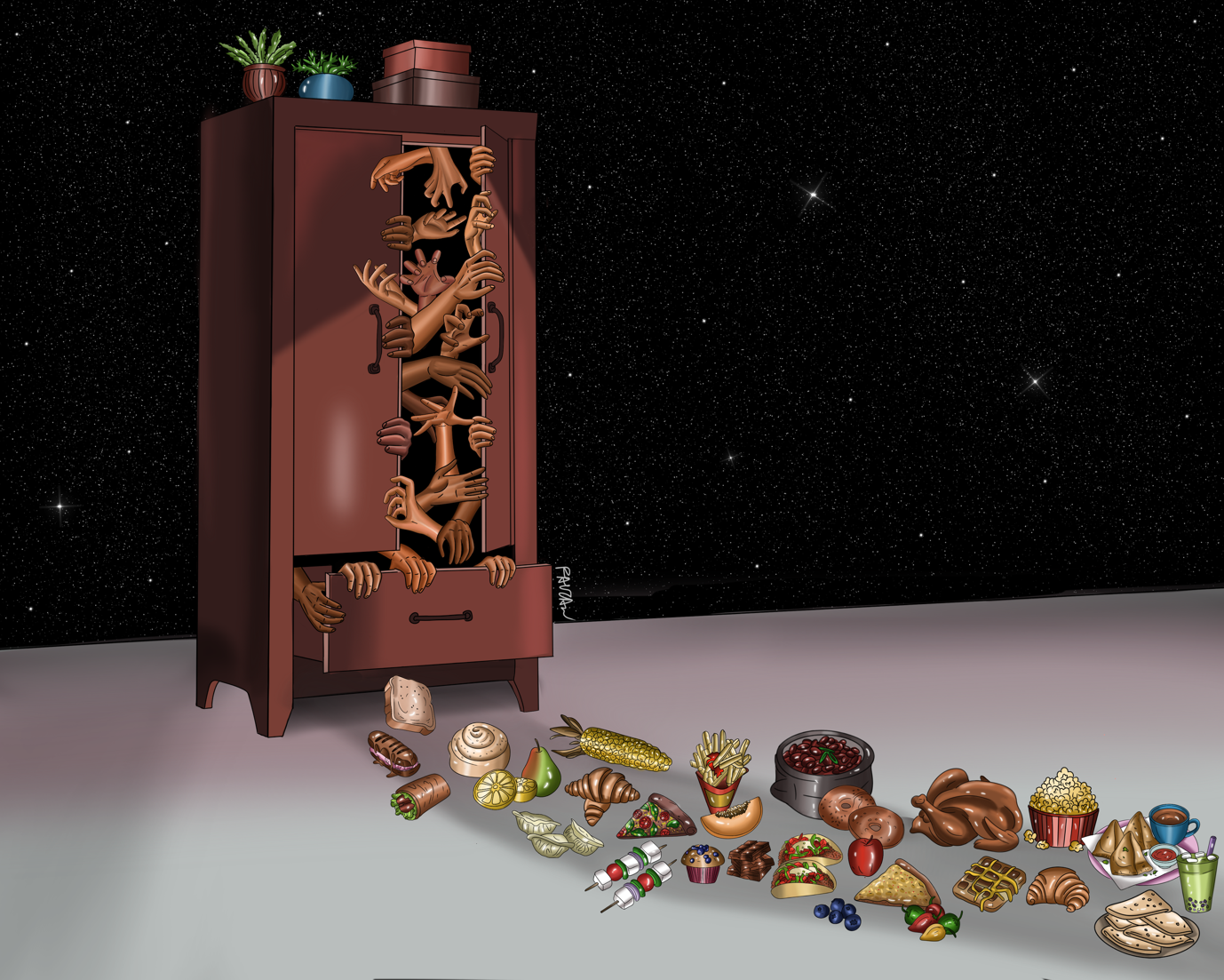
The kitchen does not hide dysphoria by locking it away. It hides dysphoria by giving it acceptable forms. It turns pain into routine. It turns distress into good habits. It turns body management into domestic competence.
This does not mean the kitchen is only a place of harm. That would flatten the story. The kitchen can also be one of the first places where trans people experiment with themselves without announcing it. Kalki found this in cooking. She could make something and be praised for it. She could perform care in a way that felt closer to her. The kitchen gave her a small, secret form of affirmation before the world gave her language.
Karan found something else in refusal. He found himself in moments when he did not cooperate fully. When he stepped away. When he did not become skilled enough to be claimed by the space. These were not failures. They were signals. The body was refusing the future being prepared for it.
Food holds all of this. It holds the memory of being corrected. It holds the memory of being praised for the wrong thing. It holds the memory of eating less to feel less visible. It holds the memory of cooking something and feeling, for a second, that the body had been read rightly. It holds the shame of appetite and the relief of control. It holds the body when the body cannot yet be spoken.
To write about the kitchen as a closet is not to force a metaphor. It is to notice what ordinary domestic life already does. It trains bodies. It assigns appetites. It decides who serves and who eats freely. It makes some people stay and lets others pass through. It hides gender inside care.
And for trans people, that hiding is never simple. Dysphoria does not always enter as crisis. It may enter as the wrong task repeated every day. It may enter as praise that feels like a trap. It may enter as hunger that feels safer than fullness. It may enter as the ache of wanting to belong to a space that does not yet know how to receive you.
The kitchen closet is built from these small things.
A knife turned in the hand. A plate carried out. A meal delayed. A compliment remembered. A body that stays too long. A body that is not asked to stay. A hunger managed before it can become desire.
This is why the kitchen matters. Not because it is only oppressive, and not because food is only intimate, but because both are true at once. The kitchen can discipline the body and shelter it. Food can make dysphoria sharper and make survival possible. A meal can be memory, control, care, refusal, performance, and proof.
This is the kitchen closet: not a place where the self simply disappears, but a space where the body learns how to survive by doing what is expected, hiding what cannot yet be said, and sometimes finding small forms of recognition inside the very routines that constrain it.
The kitchen does not ask, who are you? It asks, what will your body do?
And sometimes the answer is where the secret lives.
***
Cusack, Claire E., Alan O. Iampieri, and M. Paz Galupo. “‘I’m Still Not Sure If the Eating Disorder Is a Result of Gender Dysphoria’: Trans and Nonbinary Individuals’ Descriptions of Their Eating and Body Concerns in Relation to Their Gender.” Psychology of Sexual Orientation and Gender Diversity, vol. 9, no. 4, 2022, pp. 422–433. https://doi.org/10.1037/sgd0000515.
Mirabella, Marta, et al. “Emotional Dysregulation and Eating Symptoms in Gender Dysphoria and Eating Disorders: The Mediating Role of Body Uneasiness.” Current Psychology, vol. 43, 2024, pp. 17090–17104. https://doi.org/10.1007/s12144-024-05663-9.
- Faiza Ruksar Arif
Faiza is a gender specialist, feminist researcher, and founder of The KaiTai Collective from India, working to mainstream gender conversations through an intersectional lens. She advances gender justice by co-creating grassroots programs and curricula, facilitating inclusive trainings, and helping institutions, non-profits, schools, and corporates embed equity into their systems and strategies. Her work spans education, healthcare, and livelihoods, with a long-term focus on engagement alongside adolescents, rural women, LGBTQ+ communities, and grassroots facilitators. She contributes to research and policy on minority politics, labour, the care economy, and transgender healthcare, always centring the lived experiences of marginalised communities. Beyond research, Faiza is also a mixed-media artist.