

The Imprint of Boots on the Tongue (translated from Hindi)
- Sonakshi Srivastava
For the last two to four months, I had deprived myself of visiting the Greenwood Hotel. Since my heart wore a shade of sadness that day, Shashi nudged me, “Why don’t you go out for a while? It might do some good to your heart.” Because there was some money in my pocket, my heart did a delightful spin, and I hailed a taxi to Greenwood. Greenwood is the finest specimen of a pilgrimage for Calcutta’s nightlife. And much like Khajuraho, Ajanta, Ellora, and Jagannathpuri, its staircases, its doors, its courtyards, and its walls are adorned by celestial nymphs. In their gestures and their pose, they are robust and firm. The only distinction is that the celestial nymphs are not alive – they are merely sculptures and paintings while these nymphs of Greenwood are very much pictures of vitality – everliving, breathing.
I am reminded of the many new and old works of the many new and old writers like John Steinbeck, William Saroyan, Faulkner etc. I am reminded of all the girls from East of Eden who lived in brothels and who considered their bodies as assets as much as a farmer his farmland and a worker his hammer. There is a deluge of such girls in novels, who are spread across, smudged across, are extinguishing in the inky dark streets of Manhattan, in the hotels and bars of Honolulu, New York, and Washington. And, I bubbled with rage at the sight of such girls. These girls are Emile Zola’s. These girls are Balzac’s and Maupassant’s, these girls are Tolstoy’s Dostoevsky’s, Gorky’s, Kuprin’s, these girls are Manto’s, they are mine, they are everyone’s…
These girls. I had downed a full glass of beer in one go, and these girls began to pester me. I began to hate that economic arrangement that these girls sow, that they nurture and grow by constantly feeding into it.
But I found myself laughing at my anger. I reared my head up from the glass of beer to light my cigarette, my mouth breaking into a recurring laugh – and in the midst of it, I forgot all about those girls. I recalled my Shashi. My wife – the one who slides ten bucks into my pocket and urges me to go out so that I am relieved of my headache and then, when I return late, she is quick to scorn too.
I like Shashi’s anger. I adore her sleep-rimmed eyes, her fatigued arms and feet, her nonchalant way of talking. If Shashi were to never get upset with me, my life would become burdensome because Shashi’s eyes are not untamed like Sophia Loren’s. Her body is not tender like Marilyn Monroe’s. She does not know how to flick her hair, cast a lascivious glance, or curl up her lips to speak in a subdued voice. She does not have a figure that might drive a man mad, nor the graceful charm that would leave him spellbound because she is a wife, a Hindustani wife who can cook food, press weary feet, use a handfan and yet who, with an abundance of love radiating across her face, with her breath growing warm, her nostrils flaring, her shoulders squaring, and her aanchal fluttering cannot bring herself to say that she loves me, loves me a lot.
This is why no song could be written about Shashi, no story written about her, no epic be composed and nor has an epic been composed. To be cast as a heroine in such a composition, one requires either a Radha, a beloved belonging to another, or a Sita abducted by Ravana, or perhaps a modern, respectable young woman beset by a myriad of frustrations, by diverse sexual proclivities, and repressed desires.
Remembering Shashi with a glass of beer in hand seemed at once trivial and unreal, and so I turned my gaze around the table. The hall was brimming, and at a corner table sat my friend C. F. Kant.
Kant is a recent friend of mine. It was at the India Coffee House one day that I was telling my friends about the false promises of hypnotism and planchette—how I had put Mr. Bhatia’s wife under a hypnotic spell to ask about the club she frequents after 11 p.m., and how she invited George Bernard Shaw over planchette and coaxed a rather wonderful interview out of him, and how…
At that moment, a Madrasi gentleman sitting alone at an adjacent table asked me out of thin air, “Are you a novelist by any chance, bhai sahab?”
It was later revealed that Mr. C.F. Kant was a publicity officer of a Bengali film company, and that the famous actress Basanti Devi resided in his neighbourhood. Kant Saheb became my friend in that very instant and would run into each other on and off.
Kant Sahab picked up his bottle of rum and his glass and made his way to my table. No sooner had he sat than he said, “Haye, why are you drinking beer, my boy. Pass me the bottle, I will prepare a cocktail of rum and beer.”
“No, Kant saheb,” I resisted.
But Kant Saheb does not understand the vocabulary of resistance. He grabbed both bottles and smiled with a wink. That smile lent a glinting shine to his ebony face. An Anglo-Burmese girl in a backless blouse passed by, adding an extra gleam to it. Half-willingly, half-unwittingly, Mr. Kant extended his foot, letting it brush lightly against hers. She turned, her initial irritation quickly giving way to a smile. Her sculpted body electric, she made her way towards us.
“All the girls visiting these bars are no less than tramps,” I spoke gravely, like a moral philosopher.
“My dear Kamal babu, find me a decent girl here and I would confer you with a doctorate in sociology on behalf of the city father… tell, tell what did you understand?” Kant saheb nudged me while refilling our glasses with beer. The entire hall was in the embrace of smoky cigarettes, the concocted scents of various beers, and a song issuing from the radiogram.
Who who who who who who will give me a penny
Who who who
My name is Sweety Sweety Jenny
Who who who
Come to me when the night is dark and rainy
Who who who
Bursts of laughter, and the clamour were intensifying. The girl in the backless blouse had found herself at a solitary table in a far-off corner and was sipping at a bottle of Coca-Cola.
At first I did not pay attention to it. Missed it the second time, too. It was only around the third time that I realized that the girl or that woman or that woman with the face of a girl was sticking her tongue out at Kant from behind a Coca-Cola bottle, again and again. Kant was not unfamiliar to this pursuit, and yet I drew his attention to it, “Why is she showing you her tongue?”
“I don’t know,” Kant replied half-heartedly, without placing any value on my query for he was gazing intently at her white teeth, against which her tongue appeared bold red, and at that tongue itself, which kept darting out repeatedly and irreverently. But this did not last for long. A strong-built young sailor approached the table of that lolling woman. Kant was dejected. “Let’s go Kamal babu. There is nothing much to do here. Let’s go now. We will roam around outside…”
We paid our dues at the counter and slipped out onto the road.
At the bus-stand at the junction of Chowringhee and Bhawanipur stood a beautiful young woman. She held three or four slim books in her hands, while her gaze was filled with lethargy and weariness, apathy and helplessness.I looked only at her face because I do not like to look at anything else. I do not like it because I am religious and my religion does not permit me to immerse myself in beauty. So I only looked at her face. Dry pale lips had impressed themselves upon her face, capable of swallowing the entire world in their stretch. Her face bore small eyes, and the streaks of kohl lining their rims resembled charcoal-paved roads, along which one could travel to reach an altogether extraordinary kind of dak bungalow. Mr. Kant spoke up, “Please stay here for a bit. I will be back with a cigarette.”
I paused. The kohl-rimmed road looked at me and the lips broke into a joyous stretch. I started drowning in them like a ship with a broken mast. A wave of shame washed over me as I felt that sensation of drowning. I was just attempting to feign shyness when, from between the pale lips of that young woman, a long, slender tongue emerged, which, like a snake slithering out of its burrow, flickered briefly before retracing. One thing was clear – the snake had desired to come towards me. Whether this was a good thing or bad, I did not quite understand it then because I am from that hilly town in Dehradun where girls do not flaunt their tongues. They flaunt those things without which nothing can be accomplished.
I hurriedly crossed the footpath and darted straight to the cigarette shop where Mr. Kant was enmeshed in a critical debate – that thirteen new paise made two annas, not twelve.
I mentioned the beautiful young girl to Kant during our walk, and he broke into a fit of laughter. Tapping my back, he continued, “ Yaar Kamal, do you stay under a mountain or something? You don’t understand even this much? All this belongs to the ways of jungles and hills. Even today, in many places, people do not shake hands or say ta-ta or bye-bye; instead, they simply show their tongue. Have you ever studied an animal? Have you seen a cow—how she loves her calf, how she licks it with her tongue to show her affection? To show your tongue is to show your love. Don’t you know this?”
I did not answer Kant. The combination of beer and rum was busy at work, attempting to enslave me. Meanwhile, until we reached Basushree cinema, Kant continued pouring his lecture into my ears – about what love is, that love is a very loaded art, and that there is no medium grander than a tongue to express the magnitude of love.
Suddenly, coming to the end of a narrow lane, he stopped and lit a cigarette and said, “Bhaijaan, I have reached my home. Thank you for your company – the evening was well-spent. We will meet again… Okay, ta-ta!” He turned into his gully without waiting for my response, as though something urgent had just occurred to him.
I continued walking alone until Kalighat arrived in full view. I felt an urge to head towards the temple and observe the intricate nuances of Bengali terracotta architecture. I felt an urge to study the throng of beggars chasing after the devotees and visitors rushing past. I felt an urge to stand before the idol of Mother Kal, regarding whom a Hindi folk poet had once expressed a mere curiosity: “Mother Kali’s tongue looks as if it is made of pure gold.” The desire erupted; yet, the moment the image of Mother Kali’s tongue came to mind, I was reminded of the tongue of the Anglo-Burmese girl in Greenwood, and the tongue of the beautiful Bengali girl standing at the bus stand, and I was seized by fear.
I was seized by fear, and so I silently sneaked into the courtyard of a cinema hall. I stood there watching the poster of “Ami Tomay Bhalobasha.” A young girl, twelve-thirteen years of age, also stood watching that poster – blushing at the sight of the half-reclined actress on that poster. Her blush paled on seeing me close to her. She looked up at me very coyly.
Fearing that the span of her lips might also widen, and that Takshaka himself might emerge from the cavern of her mouth, I quietly slipped away from the spot. My intoxication was dipping but the heaviness in my head was swelling. I climbed up to the second floor of the cinema house through the adjacent staircase. Here is a famous restaurant where girls outnumber boys in attendance. I had no interest in the girls but I was craving coffee. My head was spinning. It was as if my brain would burst open.
As my cup of coffee materialised, I lit a cigarette, and began to wonder about the aspiration of the tongue in one’s mouth, about its benefits, its productivity. The purpose of a tongue is in its speaking, in eating, in uprooting wobbly teeth, in scaring kids – for example, Kali Maa from Kalighat. But here, the tongue has assumed some other role. The tongue itself has become a veritable messenger; in the era of the Mahabharata, the Gopis served as Radha’s messengers. And now, the tongues of modern-day Radhas themselves act as messengers.
Two young girls sat at the table in front of me. They were of the same age, and wore matching sarees with matching blouses – they looked like sisters. I felt as if the two of them were thrusting their tongues at me. As if I were some doctor, and blisters had bloomed on their tongues.
At a far-end corner sat an older woman, thirty-years of age, tearing away at a Mughlai paratha with some boys. At first I thought her lips were drying and she was licking them, but later I had to avert my gaze from there.
Behind my back sat a couple. Their toddler sat on the husband’s lap. There was a profound sense of serenity in the wife’s gaze, and sensing this, I began to feel a deep sense of peace. For a long while, I watched as the father fed tea to the child with a spoon. I continued to watch; then, the wife smiled, met my eyes, and stole a glance to ensure that the husband was not looking, she began to touch her nose with her tongue. As I observed this playful gesture of hers, she tilted her round face slightly forward, blushed as she pursed her lips, and extending her tongue directly towards me began to wiggle it.
It was as if I had gone insane. The tongue of the woman with the husband and the child seemed to me even larger than Sheshnag, the serpent with which Mount Sumeru was bound during the churning of the Ocean of Milk.
I gulped down the last sip of coffee and waited for the waiter. It was then that I saw Mr. C. F. Kant enter with a young Madrasi girl. The girl was wearing an expensive Patola saree with a deep yellow blouse, and a thick braid of pearl flowers was intertwined in her hair bun. From the looks of it, the girl was some fourteen or fifteen years of age, and her body seemed moulded to perform either Kathak or Bharatanatyam.
Mr. Kant stood at the door engaged in an important conversation with the waiter while the girl made her way indoors. When she noticed that I was staring at her like a fool, a surge of pride rushed through her, and with a slight shrug of her shoulders, she let the pallu of her saree slip down to the floor. As she bent down to retrieve it, our eyes met, and in a manner that was at once refined, cultured, and utterly natural, she flashed her beautiful tongue at me.
It was at that moment that Kant sahab saw me. Moving towards me, he shouted, “Hello Kamal babu, are you here too?”
He sat at my table, and, straightening a chair for his girl companion, continued, “Waah! We met again. Waah! Sit, Saroja, sit! He is my friend, Kamal babu! And she is my sister, Saroja!”
Saroja was not a bit flustered by this introduction, nor was she a bit ashamed. In fact, she spread out her feet and the folds of her saree with equal ease, and in a voice clouded by alcohol, said, “It is a pleasure to meet you!”
I went mad. I thought that Saroja was not Mr. Kant’s sister. I thought that the woman with the husband and the child was not there. I thought that there was no mother, no sister, no wife. Nobody was there. No one was there, only a vast sea, and endless darkness and night, and tongues vaster even than the colossal waves of the tide were crashing against my boat, and had borne deep, gaping cuts, both in the vessel and deep within my heart.
I went mad but I did not pull a knife out of my pocket to cut off Saroja’s tongue. I only smiled and said, “ Sister Saroja, it was really nice to meet you!” And I kept waiting, thinking she might thrust her tongue at me again.
By the time I returned home from the office, I was too worn out. I asked Shashi, “If you have some money, give it to me. My head feels very heavy. I had to work very hard today. I will drop by the coffee house.”
Shashi paused for a brief while at first and drilled her gaze at me as if to ascertain whether my head was really aching or not. Then she said, “I don’t have any money. Perhaps some ten bucks only, and there is still a week away from salary. If you cash in the note, all the money will be gone within just two days. Why go out for no reason? Why don’t you read the Navbharat Times while I prepare a cup of tea for you. Sounds okay, no?”
I did not reply. I only smiled at the words of this clever housewife, who manages to run the entire household for just a hundred rupees a month. Shashi caught me smiling, and sticking her tongue out fully to tease me, she laughed as she ran outside. I found this style of Shashi’s, this innocent little gesture of sticking out her tongue and running away, extremely endearing; for I had noticed that there was no imprint of boots on her tongue.
Translator’s Note
I share a certain passion for dissecting, and understanding the varied connotations and denotations of what it means to have an appetite for or desire for, partly out of my academic interest and partly because it is innately what makes us human. When I chanced upon the concept note for Qurbatein’s issue on “Intimate Appetites”, my academic and elementary interests found a delicious meeting ground. As chance would have it, I had just finished reading Rajkamal Chaudhary’s short stories, too. My pen was whetted.
Chaudhary belonged to the Hungry Generation (no pun intended), an all-India literary movement that held a close relationship with the Beat Generation. Questions of sex, sexual relationships, and marriage preoccupied its members. In this particular story that I chose to translate for Qurbatein, the tongue becomes the pivot, the hinge upon which the action swings. What is a tongue? What can a tongue do? A phallic symbol, much has been written and discussed about its im/potency especially by the French, and this story seals the complexities of this symbol with a dubious kiss – is the mark of a “good” woman one whose tongue is free from the impression of boots, one whose appetites, sexual or satiable, are regulated, governed, or controlled? What happens when a man encounters the various shades of hunger among a host of women? And, how does he make peace with this perturbed activity of the feminine mouth? These are the questions that Chaudhary’s story opens up for readers – questions that certainly left my own mouth wide open.
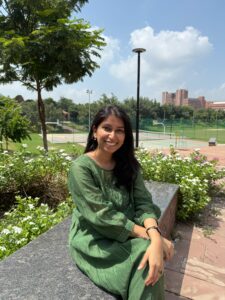
- Sonakshi Srivastava
Sonakshi Srivastava is a senior writing fellow (ELT) at Ashoka University, the translations editor
at Usawa Literary Review, and an educational arm assistant at Asymptote. Her writings have
generously been supported by the Indian Culinary Agenda, PEN English x SALT Translation
Grant, 2024 ASLE Translation Grant, Poetry HUES Foundation, Director’s Fellowship (Martha’s
Vineyards Institute of Creative Writing), Diverse Voices Fellowship, and the Alkazi Foundation
for the Arts. Her words may be found at Tendon Magazine, fingerfood mag, WritingWomen,
Usawa Literary Review, The Locavore, The Alipore Post, ASAP/Art, The Bilingual Window,
Potluck Zine, Hakara, etc. She is a former translation fellow with the South Asia Speaks
programme.